Master soft plastic worms, a versatile category of finesse baits perfect for imitating aquatic creatures like leeches and worms. Learn key rigging techniques (wacky, Texas, Carolina), retrieval methods, and how to trigger strikes from bass and other predators.
What are Soft Plastic Worms? (Worm Lures / Finesse Worms)
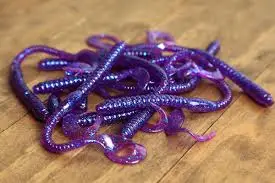
Soft plastic worms are among the most iconic and effective soft baits in fishing. As their name suggests, they are long, slender, flexible lures designed to imitate a variety of natural prey, including terrestrial worms, aquatic leeches, and other elongated creatures like sand worms or eels. Their subtle, lifelike action in the water—whether floating, twitching, or sinking—makes them irresistible to a huge range of predatory fish. They are a cornerstone of finesse fishing and are particularly effective for pressured fish or in clear water.
Key Features & Types
- Body Shape: Long and slender, available in various lengths from a few inches to over a foot. The lack of a large, active tail (like a grub) means their action is more subtle and relies on the angler's manipulation and the water's movement.
- Rigging Versatility: Worms can be rigged in numerous ways, making them incredibly adaptable to different conditions. Common rigs include:
- Texas Rig: A weedless setup with a bullet weight and offset hook, perfect for fishing in heavy cover.
- Wacky Rig: The hook is inserted through the middle of the worm, creating a unique, enticing side-to-side wiggling action as it falls. This is a top finesse technique.
- Carolina Rig: A weight is placed above a swivel, with a leader and hook below, allowing the worm to float and move freely above the bottom. Excellent for deep water.
- Neko Rig: A weight is inserted into one end of the worm, which is then rigged wacky-style, creating a falling head-down action.
- Appearance: Worms come in countless colors (natural greens, browns, blacks, and bright chartreuse or purple) and with various features like scent, salt, or floating materials.
- Target Species: Primarily known for bass (largemouth and smallmouth), but also highly effective for walleye, pike, snakehead, catfish, and even saltwater species like flounder and striped bass when fished appropriately.
How to Rig a Soft Plastic Worm
The way you rig a worm dramatically affects its action and where you can fish it.
- Head Hook (Jig Head): You can rig a worm on a jig head, similar to a grub. This gives it a more compact profile and is good for swimming it through the water column. The hook point is exposed.
- Texas Rig (Weedless): This is the most common way to fish a worm in heavy cover. Slide a bullet weight onto your line, then tie on an offset worm hook. Insert the hook point into the worm's head, bury it, and then bring it out through the body, making it "weedless."
- Wacky Rig: Simply insert the hook through the middle of the worm, leaving both ends free. No weight is used. The worm falls with a slow, side-to-side wiggle that is often deadly. You can use an O-ring to make the worm last longer.
- Carolina Rig: Tie on a barrel swivel, then a 1-3 foot leader of fluorocarbon, then your hook. Place an egg sinker above the swivel. This keeps the worm off the bottom, allowing it to float and move freely.
Fishing Techniques: Making the Worm Come Alive
Unlike lures with built-in action, a worm's action is entirely created by the angler. The goal is to make it look like a natural, vulnerable creature.
The "Drag and Hop" (Bottom Bouncing)
This is a fundamental technique for fishing a worm along the bottom. Cast out and let the worm sink. Then, drag it slowly along the bottom, occasionally lifting your rod tip to make it "hop" up. Then let it fall back down on a semi-slack line. The fall is often when fish strike. This method is excellent for catfish and slow-moving predators.
The "Swim and Pause"
This technique works well with a Texas-rigged worm. Reel steadily at a slow to moderate pace to make the worm swim through the water column. Then, pause and let it sink. This sudden change in action can trigger strikes from following fish. Vary the length of your pauses.
The "Wacky Wiggle"
For a wacky-rigged worm, the technique is simple: cast it out, let it sink on a semi-slack line. The worm will fall with a subtle, enticing side-to-side wiggle. You can also gently twitch it or give it a slight hop. This is a premier finesse technique for finicky bass.
Vibrations and Twitches
Don't be afraid to add subtle vibrations to your retrieve. Small, quick twitches of the rod tip can make the worm quiver and shake in place, imitating a worm or leech. This can be very effective when fish are holding tight to cover.
When to Use Soft Plastic Worms
They are a go-to choice in many situations:
- Pressured Fish: In clear water or when fish have seen many lures, the subtle, natural presentation of a worm often outperforms more aggressive baits.
- Slow Fishing: When fish are lethargic or in cold water, a slow, finesse worm presentation can be the only thing that works.
- Heavy Cover: The Texas-rigged worm is a top choice for fishing in thick weeds, brush, and timber without snagging.
- Deep Water: Carolina-rigged worms are excellent for probing deep structure.
Recognizing and Setting the Hook
When a fish bites a worm, you'll often feel a subtle tap, a tick, or see your line move sideways. You might also feel a heavy weight. Don't set the hook immediately on the first tap. Instead, pause for a moment, reel down any slack, and then drive the hook home with a firm, sweeping hook set. This gives the fish time to fully take the bait and ensures a solid hook-up.
Pro Tip: For catfish or slow-moving fish, a very slow, patient presentation is key. Let the worm sit on the bottom for 10-20 seconds, then give it a slight twitch, then let it sit again. This can be irresistible.