Discover the power of metal lures, including spoons and jigs. Learn why their casting distance and flash make them top choices for targeting aggressive fish like bass and snakehead in both freshwater and saltwater, plus key retrieval techniques.
What are Metal Lures? (Wire Baits / Spoons / Jigs)
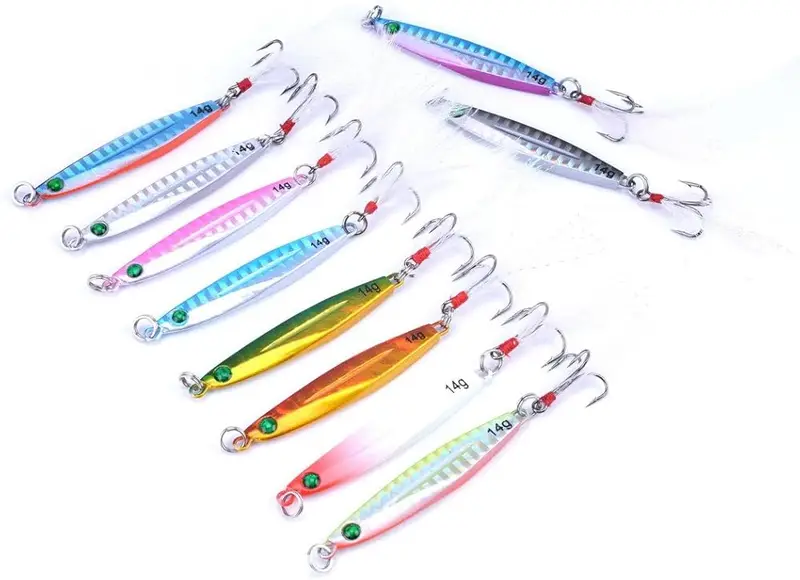
Metal lures, often referred to as wire baits, spoons, or jigs, are a broad category of hard baits made from stamped or cast metal. Their simple design—a shaped piece of metal with a hook—belies their incredible effectiveness. Their primary advantages are exceptional casting distance due to their density and a flashy, vibrating action that attracts predators from a distance. They are fundamental tools for any angler, from beginners to experts, and are effective on a huge range of species in both freshwater and saltwater environments.
Key Features & Types
- Casting Distance: Because they are dense and compact, metal lures cut through the wind and allow for long-distance casting, making them ideal for reaching fish far from shore or covering large areas of water. This is a key reason they are a top choice for surf casting and fishing large lakes or reservoirs.
- Flash and Vibration: The metal surface reflects light, creating a strong flash that mimics the scales of a baitfish. When retrieved, they also create vibrations that fish can sense with their lateral line.
- Types:
- Spoons: Concave metal lures that have a fluttering, side-to-side action.
- Jigging Metals (Vertical Jigs): Heavier, often narrower lures designed to be vertically jigged—lifted and dropped—to imitate a wounded baitfish.
- Casting Spoons/Jigs: Versatile lures designed to be cast and retrieved. Some have a single hook, while others may have a treble.
- Laser or Patterned Spoons: These feature laser-etched or painted scales and patterns to add extra flash and realism.
- Target Species: Highly effective for a wide range of aggressive predators, including largemouth and smallmouth bass, northern pike, muskie, walleye, trout, striped bass, bluefish, snakehead, and many other inshore and freshwater predators.
How to Fish Metal Lures: Techniques for Success
The techniques for fishing metal lures are simple in concept but offer great versatility. The core principle is to use their weight and flash to your advantage.
The Standard Cast and Retrieve
This is the most fundamental technique. Cast the lure out and let it sink for a few seconds to reach the desired depth. Then, begin a steady retrieve. The speed can be varied. A steady, medium-paced retrieve is a great way to search for active fish and cover water.
Varying Your Speed (Cadence Control)
Don't be afraid to experiment with your retrieval speed, a concept known as cadence control. A slow, steady retrieve can be effective in cold water or for lethargic fish. A fast, "burning" retrieve can trigger reaction strikes from aggressive fish. The key is to find what the fish want on that particular day.
The "Stop-and-Go" or Flutter Retrieve
To mimic a wounded or dying baitfish, use a stop-and-go retrieve. Reel steadily for a few turns, then pause. During the pause, the heavy lure will stop its forward motion and begin to flutter and sink erratically. This falling action is often when fish strike, as it represents an easy meal. This is a highly effective technique for suspending fish or when they are following but not committing.
Fishing at Different Depths
You can control the depth at which you fish a metal lure by using a countdown method. After the cast, count the seconds as it sinks before you start reeling. A longer count means a deeper presentation. This allows you to target fish holding at specific depths, from just below the surface to near the bottom.
A Critical Warning: Avoiding Snags
Because metal lures sink fast, they can easily snag on the bottom, especially in areas with rocks, weeds, or debris. Here are two key tips:
- Know the Bottom: If you're fishing an area with a lot of structure or debris on the bottom, use a steady, fairly fast retrieve to keep the lure up in the water column and avoid constant snagging. A slow retrieve or long pauses will likely result in a lost lure.
- The "Lift" at the End: As you retrieve the lure back towards you, especially in shallower water, raise your rod tip as it approaches. This helps lift the lure up, preventing it from digging into the bottom near the shore.
Why Metal Lures are Great for Beginners and Experts
Their simplicity, durability, and effectiveness make them a must-have for any angler. They are often recommended as the best choice for beginners because they are easy to use and cast far, helping new anglers find fish quickly. For experts, their versatility and ability to target deep water or reach distant structure make them an indispensable tool in the tackle box.
Pro Tip: For targeting fish like topwater culter or snakehead in open water during the day, a metal jig or spoon is often the top choice. Their long casting distance allows you to reach fish holding far from shore, where they are often most active.