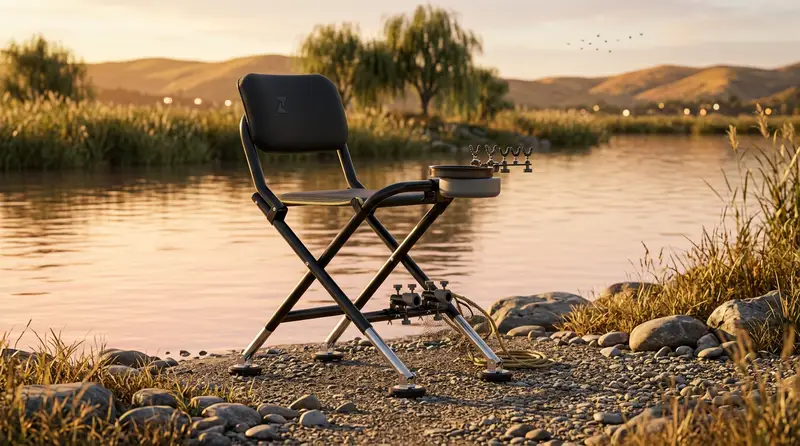
Master the buzzbait, a topwater noise bait designed to create surface commotion. Learn how its spinning blade generates flash and sound, why it's weedless, and key retrieval techniques for bass and snakehead in heavy cover.
What is a Buzzbait? (Noise Bait / Buzzer)
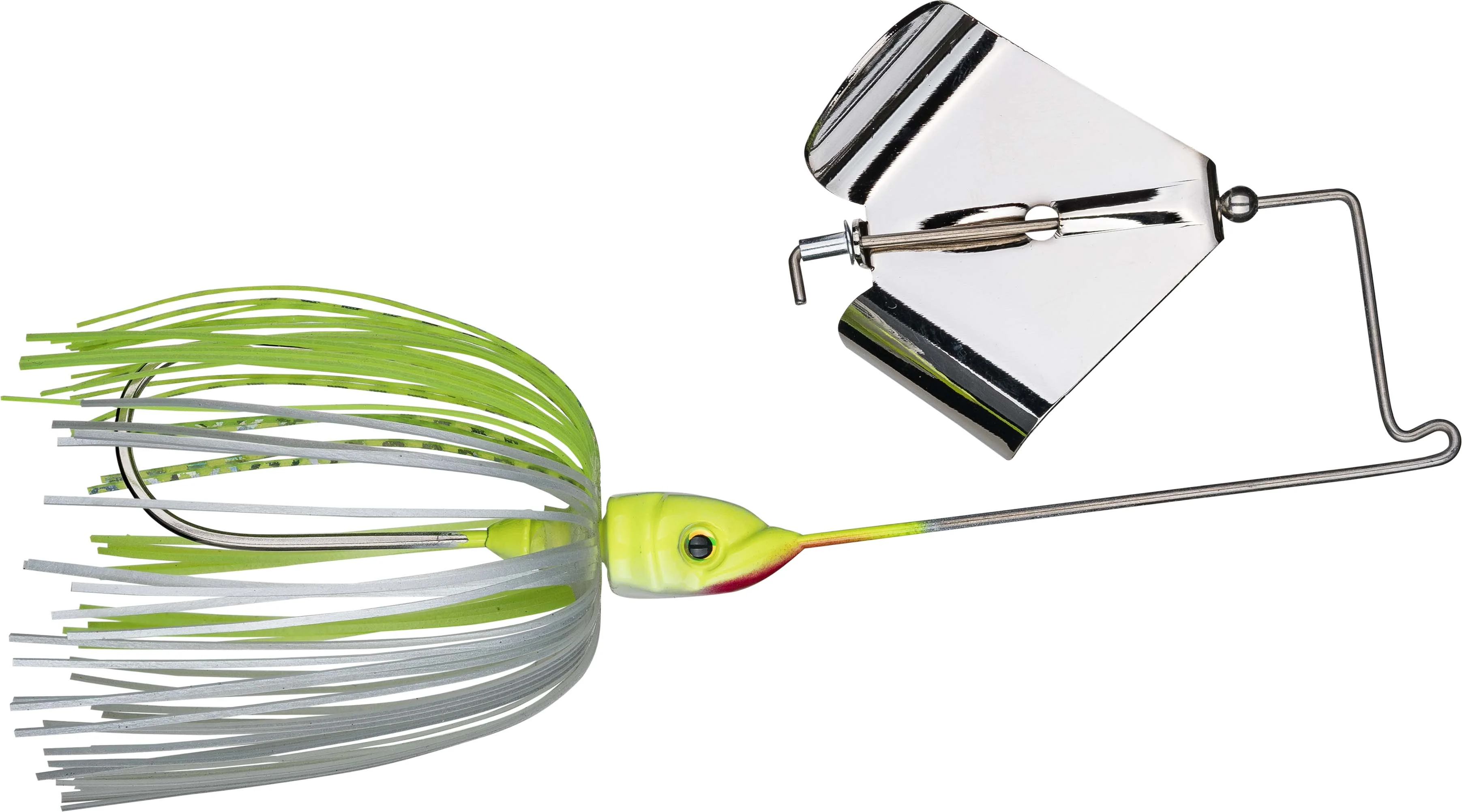
The buzzbait, often called a noise bait or buzzer, is a specialized topwater lure designed to do one thing exceptionally well: create a massive surface disturbance. It features a safety-pin style wire frame with a large, spinning metal blade (often a Colorado or Indiana shape) mounted above a lead head with a skirt. When retrieved, the blade spins and churns the water, creating a loud buzzing or gurgling sound, a spray of water, and a strong flash. This combination of noise, flash, and surface commotion is irresistible to aggressive predators, triggering reaction strikes even in low-light or murky water. Like a spinnerbait, its design makes it highly weedless, allowing it to be fished through heavy cover.
Key Features
- Spinning Blade: The large metal blade (usually a single blade) spins when retrieved, creating the signature buzzing sound and flash. The blade's shape and size affect the sound and water displacement.
- Weedless Design: The wire frame positions the hook point up, and the skirt helps deflect weeds, making it highly effective for fishing in heavy cover like lily pads, grass, and shallow timber without snagging.
- Noise and Flash: The primary attractants. The buzzing sound mimics a fleeing or struggling prey, while the flash attracts fish from a distance. A quality buzzbait will have a blade that spins freely and consistently.
- Target Species: Primarily known for largemouth bass, but also deadly for snakehead, pike, muskie, and other aggressive surface feeders. The original article also mentions topmouth culter.
How to Fish a Buzzbait: Techniques for Success
Fishing a buzzbait is all about creating a consistent, enticing surface disturbance. The technique is straightforward but requires attention to speed and cadence.
The Standard Retrieve: Steady and Straight
This is the most fundamental technique. Cast the buzzbait out and immediately begin a steady retrieve. The key is to maintain a speed that keeps the blade spinning consistently on the surface. A medium speed is a great starting point. The lure will create a wake and a buzzing sound as it moves. This is a perfect search bait technique to cover water and locate active fish.
Varying Your Speed (Cadence Control)
Don't be afraid to experiment with your retrieval speed, a concept known as cadence control.
- Slow Roll: A very slow retrieve can be effective in cooler water or when fish are less active, creating a deeper wake and a lower-frequency buzz.
- Burning: A fast, "burning" retrieve creates maximum surface commotion and can trigger reaction strikes from aggressive fish.
The "Stop-and-Go" or "Pause and Pop"
To add an extra element of enticement, try a stop-and-go retrieve. Reel steadily for a few seconds, then pause for a moment. The heavy buzzbait will stop and begin to sink slightly. Then, give your rod a sharp pop to make it lunge forward and resume buzzing. This sudden change in action can be irresistible to following fish. The original article suggests a variation: let the bait sink, then retrieve slowly, and every 5 seconds, give it a sharp upward twitch to make it rise and dart forward.
Fishing in Heavy Cover
The buzzbait's weedless design makes it perfect for fishing in thick vegetation. Cast it onto lily pads, into grass mats, or along weed edges, and retrieve it right over the top. The blade will churn through the vegetation, and the hook will slide through without snagging. This is a prime technique for targeting bass and snakehead hiding in the slop.
Why Buzzbaits are Great for All Anglers
Their simplicity, effectiveness, and exciting surface strikes make them a favorite. They are a great choice for beginners because they are easy to fish—just cast and retrieve—and they consistently draw explosive strikes. For experts, the ability to fish them at various speeds and in heavy cover makes them an indispensable tool for triggering reaction bites from pressured fish.
Selecting a Quality Buzzbait
The original article offers a crucial tip: not all buzzbaits are created equal. When selecting a buzzbait, look for one where the blade spins freely and consistently without wobbling or catching on the wire. The skirt should be full and well-attached. A quality buzzbait will run true (straight) through the water without rolling over. Avoid cheap, poorly made models that may not spin properly or will tangle easily.
Pro Tip: For the best action, "sound first, action second" is the key. A quality buzzbait's sound is its primary attractant. Also, consider using a short, heavy-action rod for better hook-setting power when a fish explodes on your bait.