Master the VIB (Rattlin') lure, a dense, fast-sinking hard bait known for its tight vibration and loud internal rattles. Learn how to use its exceptional casting distance to reach offshore fish, plus key retrieval techniques for working mid to deep water columns around structure.
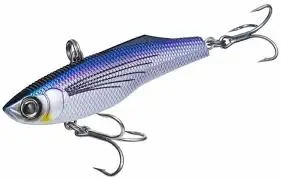
What is a VIB Lure? (Rattlin' / Vibration Bait)
The VIB lure, often called a Rattlin' or simply a vibration bait, is a unique type of hard bait designed for one primary purpose: to get deep, fast, and create maximum vibration. Unlike crankbaits, VIBs have no diving lip. They are solid, dense lures (typically 10-20% heavier than other lures of the same size) that sink quickly on a slack line. Their action comes entirely from the angler's retrieve, producing a tight, high-frequency wobble. They are filled with numerous small rattles (balls) that create a loud, buzzing sound, making them incredibly effective for locating fish in deep or murky water, or over large, featureless flats.
Key Features: Why Choose a VIB?
- Ultra-Fast Sinking: Their high density allows them to sink rapidly, making them ideal for quickly reaching deep-water fish or fishing strong currents.
- Loud Internal Rattles: The multiple chambers filled with rattles produce a loud, distinctive buzzing sound that vibrates through the water, attracting fish from a distance. This is a key advantage in stained water or when searching for scattered fish.
- Tight Vibration Action: When retrieved, they produce a tight, fast wobble that displaces water and creates intense vibration, triggering reaction strikes.
- Exceptional Casting Distance: Due to their density, VIBs are among the best casting lures available. They can be launched incredible distances, allowing you to reach offshore structure, deep channels, and fish holding far from the shore that other lures can't reach. This makes them a top choice for long-distance casting and searching vast areas.
- Mid to Deep Water Specialists: They excel at fishing the middle and bottom layers of the water column, making them perfect for targeting fish holding deep or near the bottom.
How to Fish a VIB Lure: Techniques for Success
Fishing a VIB is deceptively simple in theory, but mastering its use in different conditions is key to consistency. The core principle is to use its weight and rattles to your advantage.
The Standard Retrieve: Find the Depth, Maintain the Speed
The most fundamental technique is a steady retrieve. After casting, let the lure sink to your desired depth (using a countdown method). Once it's in the zone, begin reeling at a steady pace. The key is to maintain a speed that allows the lure to vibrate and rattle effectively. In both freshwater and saltwater, this simple approach is highly effective. You are essentially covering water and letting the vibration and sound do the work.
Varying Your Presentation for More Strikes
While a steady retrieve works, you can enhance it with simple variations, a concept known as cadence control.
- Lift and Drop: Reel steadily, then pause for a moment, allowing the heavy VIB to sink back down. This "fall" is often when fish strike, as it mimics a dying or wounded baitfish. This is a classic vertical jigging technique when fishing from a boat.
- Speed Up/Slow Down: Experiment with your retrieval speed. A fast retrieve can trigger reaction strikes from active fish, while a slower, more subtle retrieve can be better for finicky or cold-water fish.
Targeting Structure: Working Pilings and Deep Cover
VIBs are exceptionally effective for fishing around vertical structure like bridge pilings, dock posts, and deep drop-offs. Here's a key technique:
- Cast Beyond the Structure: Cast your VIB past the target (e.g., a piling).
- Control the Sink: Let it sink to the desired depth. Be mindful of current, as it can carry your line and cause the lure to swing into the structure prematurely.
- Retrieve Past the Structure: Begin your steady retrieve, bringing the lure past the piling. The vibration and flash will draw fish out from hiding. This is a deadly technique for species like striped bass or seabass holding tight to cover.
A Critical Warning: Avoid Shallow Water
Because VIBs sink so fast and are heavy, they are not suitable for shallow water. Fishing them in water less than 3-5 feet deep almost guarantees snagging on the bottom. They are designed for deeper water where you can control their depth and avoid constant hang-ups. Their density makes them a powerful tool, but it also requires careful depth management to avoid losing lures.
Retrieval Tip: The Lift to Avoid Snags
As you retrieve a VIB back towards you, especially in shallower areas near the shore, it's crucial to raise your rod tip as the lure approaches. This helps lift the lure up in the water column, preventing it from digging into the bottom and snagging as you get closer.
Pro Tip: The VIB's incredible casting distance makes it a premier search bait. When you're on a large, open body of water with no visible structure, tie on a VIB and make long casts to locate schools of fish. The noise and vibration will help you find them quickly.