The Popper is a classic surface lure with a concave mouth that chugs and splashes water to mimic fleeing prey, triggering strikes from aggressive fish like bass, snakehead, and GT. Learn its features, target species, and key retrieval techniques here.
What is a Popper?
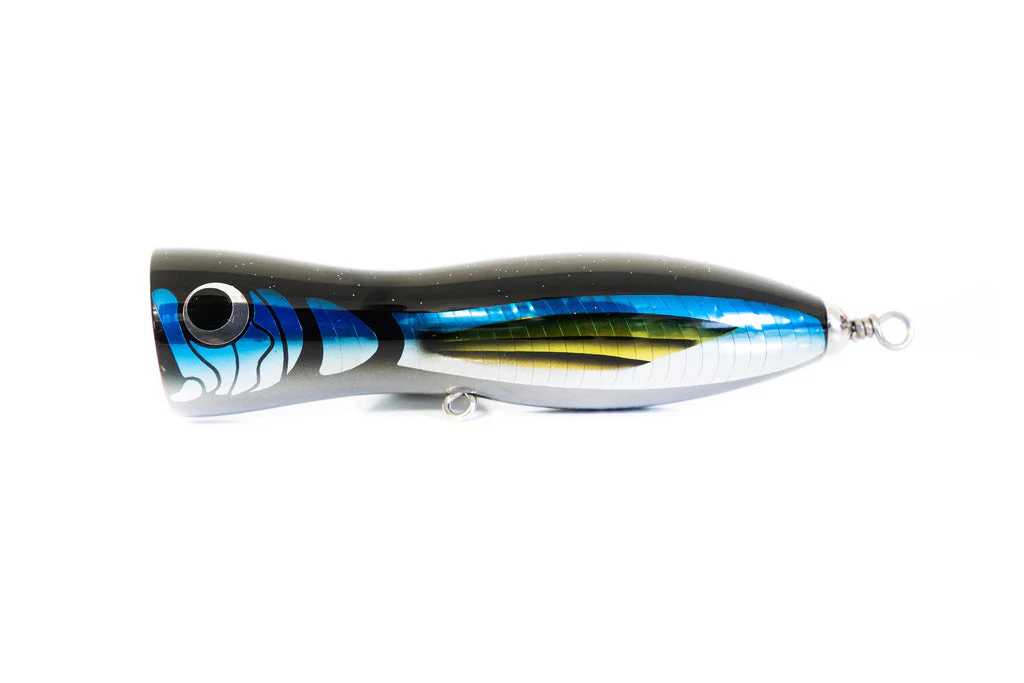
The Popper (also known as a chugger or surface lure) is a type of hard bait distinguished by its large, concave or sloped "mouth" on the front. Unlike diving lures, Poppers are designed to stay and create disturbance on the surface. They are typically tail-heavy, causing them to float with the head pointing upwards at an angle when at rest. When the angler twitches the rod tip, the mouth catches water, creating a splash, a "pop" sound, and foam—perfectly imitating a wounded or frightened baitfish, frog, or other prey struggling on the surface.
Key Features
- Appearance: Usually has a short, stout body with a characteristic concave, sloping, or flat face. It typically has no diving lip (bill).
- Action: A pure surface action created entirely by rod movement. The angler's twitches and pauses make the lure walk, chug, and spit water.
- Sound & Visual: The primary attractors are the splashing sounds and surface commotion. Some models contain internal rattles (like steel balls) to add more noise.
- Target Species: Excellent for aggressive surface feeders in both freshwater and saltwater. Common targets include Asian seabass (Barramundi), snakehead (Channa), topwater trout, peacock bass, freshwater gar, saltwater species like jacks (GT), snook, ladyfish, and mackerel. The original article specifically mentions topwater predators like Culter alburnus (topmouth culter), yellowcheek carp, mandarin fish, and perch in freshwater, and ladyfish, Japanese seabass in saltwater.
Fishing Techniques for Poppers
The key to success with a Popper lies in rod control. The speed and rhythm of your twitches dictate the lure's action and appeal. The goal is to make the lure pop and throw water, not just reel it in smoothly.
Basic "Pop and Pause"
After the cast, point your rod tip down towards the water. Use short, sharp twitches of the rod tip to make the lure "pop" and throw water. Immediately after the pop, pause for a moment (1-2 seconds), keeping the line slightly tight. This pause is often when the fish strike. Then, reel in the slack and repeat the sequence.
Varying the Rhythm
Experiment with different cadences to find what the fish want that day:
- Fast & Aggressive: Consecutive, sharp pops for active, aggressive fish.
- Slow & Deliberate: Slow pops with longer pauses for less active or colder water fish.
- Steady Rhythm: A consistent "pop-pop-pause" pattern.
Presentation by Condition
- Best Times: Dawn and dusk are prime times, especially near weed edges, shallow flats, or structure where fish are hunting near the surface.
- Active Fish: A faster, more aggressive popping cadence can trigger reaction strikes.
- Less Active or Colder Water: Slower pops with longer pauses are often more effective. Focus on calmer areas like coves or back eddies.
- Water Clarity: Poppers can be particularly effective in slightly stained or muddy water, as the surface disturbance and noise help fish locate the lure.
A Simple Retrieval Method
A good starting point for beginners is to cast, then reel in at a medium speed while holding the rod tip high. This creates a steady wake. As the lure approaches the shore or boat, lower the rod tip and continue reeling to maintain the surface action.
Advanced Tip
For a more advanced retrieve, try lowering the rod tip after the cast and using very short, fast twitches while reeling in quickly. This creates a continuous, rapid chugging action that can be irresistible to fast-moving predators.
Note: The original article contains a comparison with Crankbaits and Minnows. While Poppers excel on the surface, Crankbaits are diving plugs designed to run at various depths with a wide wobbling action, making them better for deeper water or when fish are less active near the top.