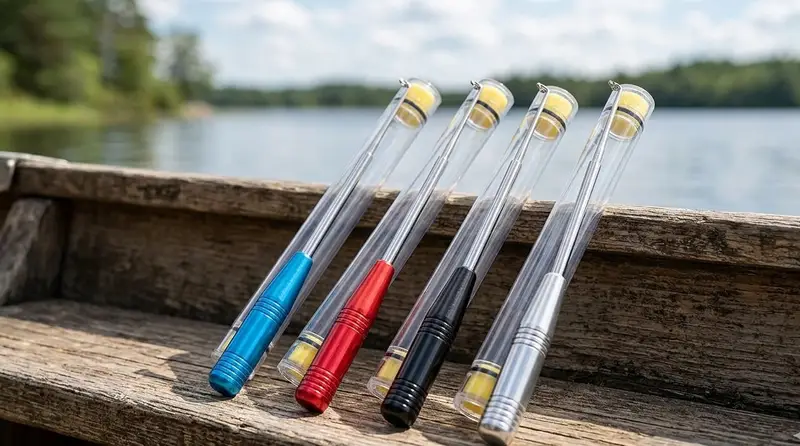
Upgrade your fishing game with this 4-piece stainless steel hook remover set. Featuring a 360-degree spiral design, non-slip handles, and magnetic bottoms, this kit ensures efficient, safe, and hook-friendly extraction for all anglers, from freshwater panfishing to saltwater adventures.
The Ultimate Angler’s Guide: Enhancing Your Tackle Box with the 4-Piece Spiral Hook Remover Set
Introduction: The Angler's Perpetual Challenge
Every angler, from the weekend hobbyist sitting on a quiet lake dock to the seasoned charter captain chasing saltwater giants, shares one universal experience: the moment of truth after a successful hook-set. Once the fish is in the net or at the side of the boat, the primary objective shifts immediately from the thrill of the catch to the safety of the release. For years, the standard tool of choice has been a pair of heavy needle-nose pliers. While functional, pliers often struggle with deep-set hooks, cause unnecessary tissue damage, and are prone to rust in the harsh environments we love to fish in.
The 4-Piece Fishing Hook Remover Set represents a significant evolution in tackle technology. By abandoning the bulk of traditional pliers in favor of a specialized, streamlined spiral design, this tool set aims to solve the primary friction points of modern fishing: speed, fish safety, and tool longevity. In this comprehensive guide, we will analyze why this toolset is rapidly becoming a staple in professional and recreational tackle kits alike.
Product Breakdown: Anatomy of the Upgraded Hook Remover
This kit is not just a single tool; it is a system designed for versatility. By including four pieces, it allows for strategic placement—one in your vest, one in your boat, one in your tackle bag, and one as a spare or a gift for a fishing buddy. Here is what makes the hardware stand out:
- Material Composition: The use of stainless steel with an anodized surface treatment is a critical upgrade. Anodization adds an oxide layer that increases corrosion resistance, which is essential for preventing the rust that inevitably plagues cheaper, carbon-steel tools exposed to saltwater or humid freshwater environments.
- The 360-Degree Spiral Extractor: This is the heart of the design. Traditional tools require a pincer movement, which is often difficult inside a fish's mouth. The spiral design allows you to thread the fishing line through the coil, slide the tool down to the hook bend, and apply pressure. This 360-degree approach stabilizes the hook, ensuring that the force is applied to the shank, not the fish's delicate gill tissues.
- Magnetic Base Technology: Often overlooked, the magnetic bottom is a clever addition. When you are dealing with small hooks, split shots, or swivels that have dropped into the bottom of a boat or a messy tackle bag, the magnet acts as a mini-retrieval tool, saving precious fishing time.
- Ergonomic Non-Slip Handle: Fishing in the rain or with wet hands is the norm. The non-slip texture ensures a secure grip, preventing the tool from slipping during that crucial moment of extraction, which protects both the angler and the fish.
Comparative Analysis: Why Ditch the Pliers?
To understand the value of this tool, we must compare it against the traditional hierarchy of hook removal gear:
1. Traditional Needle-Nose Pliers
Pros: Multi-functional (cutting line, bending wires).
Cons: High risk of injury to the fish. Because pliers require a "squeeze and pull" motion, they often tear the tissue around the hook hole. They are also bulky and prone to rust if not meticulously oiled.
2. Pistol-Grip Dehookers
Pros: Excellent for deep-hooked fish.
Cons: Often too large for small-to-medium sized fish. They are mechanically complex and can break internally if the spring mechanism fails.
3. The 4-Piece Spiral Hook Remover (Our Subject)
Pros: Lightweight, virtually indestructible (no moving springs to break), and highly precise. They are specifically designed for the "threading" method, which is the gold standard for catch-and-release safety.
Tactical Usage: How to Use the Device Effectively
Many anglers struggle with hook removers because they treat them like mini-pliers. This tool operates differently. Follow this protocol for maximum efficiency:
- Assess the Hook Set: Before inserting the tool, ensure the fish is calm. Do not force the tool if the fish is thrashing.
- Threading the Line: Take the fishing line and insert it through the spiral coil of the extractor. This acts as your guide path.
- The Descent: Slide the tool gently down the line. The spiral shape allows you to track the line directly to the eye of the hook or the bend.
- The Extraction: Once you reach the hook, push the tool slightly inward to unseat the barb. Then, simply pull the line and the tool simultaneously. Because the hook is trapped within the spiral, it will come out at the same angle it went in, minimizing tissue trauma.
Pro Tip: Always keep your line slightly taut during this process. A loose line can cause the hook to flop around inside the fish’s throat, defeating the purpose of the tool.
Target Audience and Scenarios
Who benefits most from this set? The utility is broad:
- Catch-and-Release Anglers: If you are fishing for Bass, Trout, or Panfish with the intention of releasing them, this tool is mandatory. The minimal damage to the fish ensures higher survival rates.
- Beginners and Children: Using pliers around a thrashing fish can be dangerous for kids. This tool provides a safety buffer, keeping fingers away from teeth and sharp hook points.
- Kayak and Shore Anglers: Space is at a premium. The compact nature of these 6.8-inch removers makes them superior to bulky tool kits for those who pack light.
- Saltwater Anglers: While saltwater fish have tougher mouths, these tools are excellent for smaller reef fish or bait species. The anodized surface ensures they survive the salt spray.
Safety, Conservation, and Precautions
As anglers, we are stewards of the water. Using a tool like this is a sign of an ethical fisherman. However, observe these precautions:
- Hook Depth: If a hook is swallowed deep in the gullet, even this tool has limits. If you cannot see the hook, trying to force a tool can puncture vital organs. In such cases, it is often better to cut the line as close to the eye as possible and let the hook dissolve (if using non-stainless steel hooks).
- Tool Maintenance: Despite the "stainless" claim, always rinse the tools with fresh water after a day of saltwater fishing. Dry them before placing them back into the storage tube to prevent moisture buildup inside the tube.
- Don't Over-Torque: While the stainless steel is sturdy, it is not a crowbar. Do not use the tool to pry open a fish's mouth—that is what a mouth spreader is for. Use this tool solely for the removal of the hook.
Buying Guide and Value Analysis
When purchasing fishing gear, the cost-to-utility ratio is paramount. This set typically lands in the low-to-mid price bracket, but provides four units. This means you are paying a fraction of what a single, high-end aluminum dehooker would cost. The inclusion of storage tubes makes them an ideal gift for fishing clubs, youth outings, or as stocking stuffers for the angler who already has everything.
Price Expectation: Given the quality of stainless steel and the 4-piece count, look for a price point that reflects the convenience of the bulk pack. If you see them priced significantly lower, check if they are aluminum—if they are stainless as described, the value is excellent.
Final Verdict: The Recommendation Index
Based on durability, functionality, and the overall benefit to fish conservation, we give this tool set a strong recommendation.
- Effectiveness: 9/10 (Superior to pliers for deep-hooked fish).
- Durability: 8.5/10 (Anodized stainless steel is a top-tier material choice).
- Ease of Use: 9/10 (Short learning curve).
- Portability: 10/10 (Slim design fits anywhere).
Overall Recommendation Index: 9/10. This is not a luxury item; it is a utility essential. Whether you are a weekend warrior or a dedicated tournament angler, the ability to release fish quickly and safely is a mark of competence. The 4-piece set ensures you never find yourself on the water without the right tool for the job. Do yourself, and the fish, a favor—add this to your kit.
Frequently Asked Questions (FAQ)
- Can I use this for catfish?
- Yes, for smaller-to-medium catfish. However, for massive trophy catfish, you may want a longer-reach tool to keep your hands further away from their sandpaper-like teeth.
- Does the magnetic bottom affect my electronic gear?
- The magnets are strong enough to pick up hooks but generally not strong enough to disrupt modern fishing electronics (fish finders/GPS) unless placed directly on the screen for an extended period. Keep them in your tackle tray.
- Will it rust in saltwater?
- Anodized stainless steel is highly resistant, but no metal is completely rust-proof in salt. Always rinse with fresh water post-trip and let it air dry.