Master the pencil lure (stickbait), a topwater hard bait known for its walk-the-dog action. Learn key retrieval techniques, including cadence control and rod tip manipulation, to trigger strikes from bass, stripers, and other predators in shallow water and around cover.
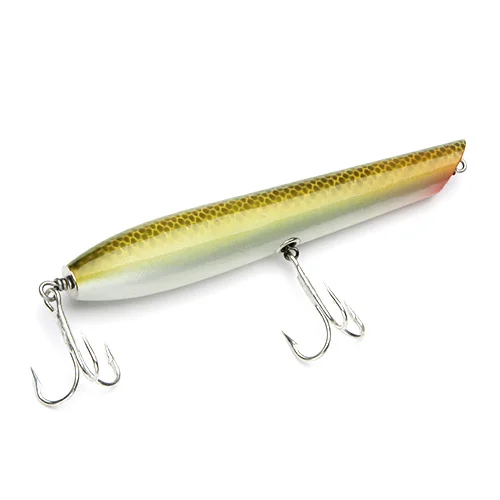
What is a Pencil Lure? (Pencil Bait / Stickbait)
The pencil lure, also commonly known as a stickbait or pencil popper, is a classic topwater hard bait prized for its subtle yet enticing surface action. Its design is unmistakable: a long, slender, cylindrical body (resembling a pencil) with a small head and, most importantly, no diving lip or bill. This lack of a lip means its entire action is generated by the angler's skill. When worked correctly, it doesn't splash like a popper, but instead darts and glides side-to-side across the surface, pushing water and creating a tempting "V" wake and subtle ripples. This action perfectly mimics a fleeing baitfish or even a small water snake skittering on top, making it irresistible to predatory fish.
Key Features & Target Species
- Action: Relies entirely on rod movement for its signature "walk-the-dog" action (side-to-side darting).
- Best For: Excels in shallow water, over weed beds, and near structure like docks and fallen timber where fish are hunting near the surface.
- Target Species: Highly effective for a range of topwater predators, including topwater bass (largemouth, smallmouth), striped bass, snakehead, and freshwater fish like topmouth culter.
- Advantage: Creates surface disturbance and noise without the heavy splash of a popper, which can be key in clear water or when fish are pressured.
How to Fish a Pencil Lure: Mastering the Walk-the-Dog
Fishing a pencil lure effectively is a skill that separates seasoned anglers from beginners. Unlike a simple crankbait, the pencil's action is entirely dependent on your rod control. The core principle is to create a consistent, rhythmic side-to-side motion.
The Basic Walk-the-Dog Retrieve
The classic technique involves a steady, rhythmic twitch of the rod tip. After casting, point your rod tip down toward the water. Begin reeling at a moderate pace while simultaneously using short, sharp, and rhythmic twitches of the rod tip. The key is to keep the motion going without pausing—the rod tip moves, you take up the slack with the reel, and you twitch again. This continuous cycle makes the lure dart left, then right, then left again, "walking" across the surface.
Varying Your Presentation for More Strikes
Once you've mastered the basic rhythm, you can adjust your retrieve to match fish activity and conditions. This is often called cadence control.
- For Aggressive Fish (Fast Cadence): To create a frantic, fast-darting action, lower your rod tip further towards the water and use very short, quick twitches combined with a faster reeling speed. This makes the lure dart rapidly from side to side, imitating a panicked baitfish.
- For Hesitant or Less Active Fish (Slow Cadence): If fish are following but not striking, or in cooler water, slow things down. Use longer, more deliberate sweeps of the rod and a slower reeling speed. This creates a wider, more languid side-to-side glide that can entice a strike from a less aggressive follower.
- The Pause (The "Killer" Move): Don't be afraid to occasionally pause your retrieve for a second or two. A suspending pencil lure will simply hover, often triggering a strike from a curious or competitive fish that thinks the prey has stopped.
Pencil Lure vs. Popper: A Key Distinction
Anglers often confuse pencil lures with poppers. The main difference is in the action and sound. A popper has a concave face designed to push water and create a loud "pop" and splash. A pencil lure, with its streamlined head, creates minimal splash and relies on its side-to-side walking action and surface wake to attract fish. In clear water or when fish are wary, the pencil's more subtle approach can be far more effective.
Pro Tip: Practice your walk-the-dog retrieve in clear, shallow water where you can watch the lure's action. This visual feedback is the fastest way to perfect your technique.