Master the frog lure, a topwater soft bait designed for heavy cover. Learn why hollow body frogs are weedless, how to work them across lily pads and slop, and the critical hook-setting technique for bass and snakehead.
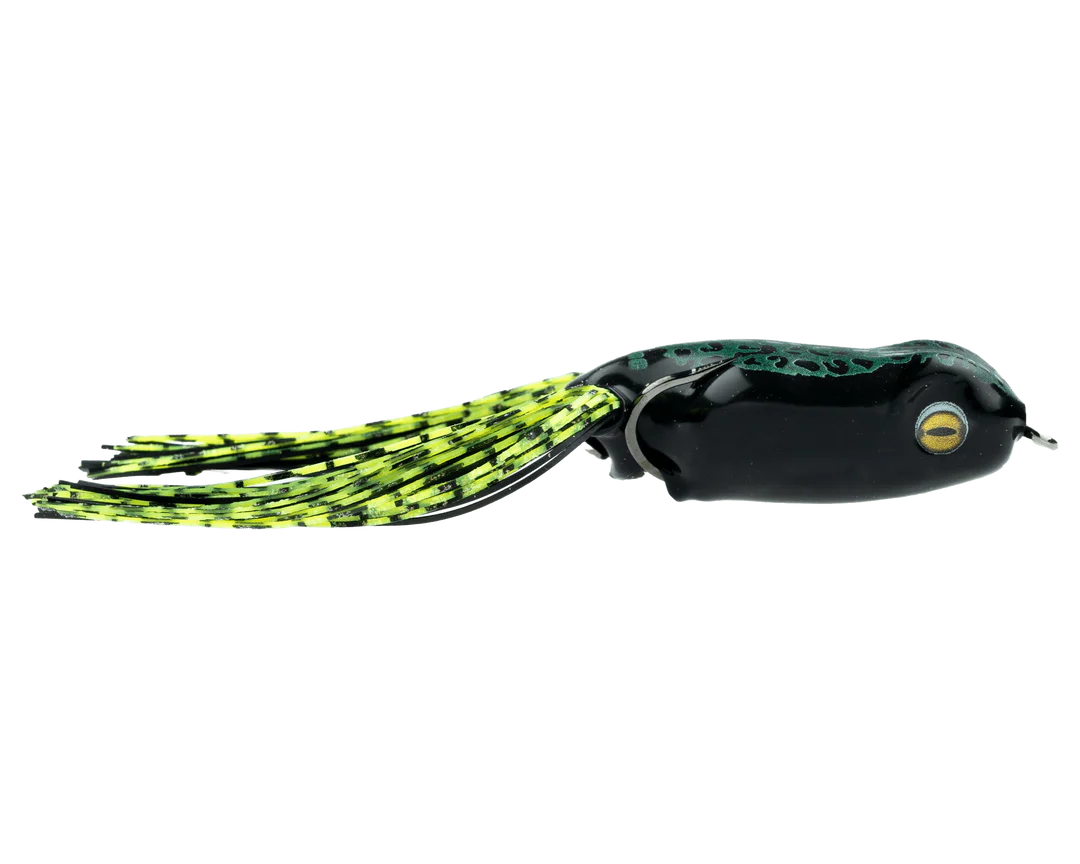
What is a Frog Lure? (Hollow Body Frog / Weedless Frog)
The frog lure, often called a hollow body frog, is a specialized topwater soft bait designed for one of the most exciting types of fishing: working through the thickest cover. Its body is made of soft, hollow rubber or plastic, making it buoyant and compressible. The hooks are specially designed to ride up against the body, making the lure virtually weedless. This allows you to cast it into places other lures can't go—dense lily pads, matted vegetation, fallen timber, and shallow slop—where big fish like bass and snakehead hide. The visual strike of a fish exploding through the cover to eat a frog is one of the most thrilling moments in fishing.
Key Features
- Weedless Design: The hooks are positioned to point upwards and are often recessed into the body. This allows the frog to slide over and through heavy vegetation without snagging.
- Hollow Body: Made of soft, hollow plastic or rubber, making the lure buoyant and giving it a lifelike, compressible feel. This also helps it float and pop over cover.
- Realistic Appearance: Modern frog lures feature incredibly detailed molding, including legs, eyes, and skin texture, to perfectly imitate a frog or other surface prey.
- Sharp, Heavy-Duty Hooks: Frog lures are equipped with strong, sharp hooks designed to penetrate the bony jaws of fish like bass and snakehead, even after a powerful strike.
- Target Species: Originally designed for snakehead, frog lures are now a top choice for largemouth bass in heavy cover, as well as pike, muskie, and other ambush predators.
How to Fish a Frog Lure: Techniques for Heavy Cover
Fishing a frog is all about creating surface disturbance and enticing a strike from below. The technique is surprisingly simple but requires patience and a good hook set.
The Basic "Walk the Frog" Retrieve
This is the most common and effective technique. Cast your frog onto or just beyond the cover you want to target. Then, begin retrieving with a series of short, sharp twitches of your rod tip, combined with steady reeling. This creates a side-to-side "walking" action, making the frog dart and gurgle across the surface. The goal is to create a commotion that mimics a frog trying to escape. This is often called "walking the frog".
The "Pop and Pause"
An alternative to walking is a simple "pop and pause." Reel steadily for a few feet, then give the rod a sharp pop to make the frog lunge forward and create a splash. Then, pause for a second or two, letting the frog sit still. The pause can be deadly, as it imitates a frog that has stopped to rest. Then, repeat.
The Slow Crawl
In colder water or when fish are less active, a very slow presentation can be key. Simply cast the frog out and let it sit for 10-20 seconds. Then, drag it slowly across the surface or just pop it every few feet. The subtle movement can be enough to trigger a strike.
The Most Important Part: The Hook Set
Frog fishing requires a very specific and disciplined hook-setting technique. Because the fish often explodes on the lure and the hooks are recessed, many anglers miss fish by setting the hook too early.
- See the Strike, Don't React Immediately: When a fish hits your frog, you'll see a massive explosion. Your instinct will be to set the hook immediately. Don't.
- The Pause (Count to 3-5): Instead, pause for a full 3-5 seconds. This is the hardest part. You need to give the fish time to take the frog fully into its mouth and turn. If you set the hook too early, you'll pull the frog right out of its mouth.
- Reel Down and Set the Hook Hard: After the pause, reel down any slack line quickly, then drive the hook home with a powerful, sweeping hook set. You need to be aggressive to drive the heavy-duty hooks through the fish's bony mouth.
This delayed hook set is the single most important skill in frog fishing. Practice it until it becomes second nature.
When and Where to Use Frog Lures
Frog lures excel in specific environments:
- Heavy Vegetation: Lily pads, hydrilla, milfoil, and other matted weeds are prime frog territory.
- Shallow Flats: Shallow, weedy flats where bass and snakehead hunt.
- Fallen Timber and Brush: The weedless design allows you to work frogs through submerged wood.
- Around Docks and Pilings: You can skip frogs under docks and into tight spaces.
- Best Times: Early morning and late evening are prime, but frogs can work all day, especially in overcast conditions.
Pro Tip: Don't be afraid to work your frog very slowly. Let it sit in pockets of open water within the weeds for 10-20 seconds. Often, the fish are watching it and will strike when it's静止的. Also, consider using a shorter, heavier rod (like a heavy or extra-heavy action) for better hook-setting power and control when fighting fish out of heavy cover.