Master creature baits, including soft plastic crawfish (craws), lizards, and centipedes. Learn how their lifelike appendages create vibration and how to use them for bass and other predators. Discover key rigging options (jig head, Texas rig) and bottom-contact techniques.
What are Creature Baits? (Craws, Lizards, Centipedes)
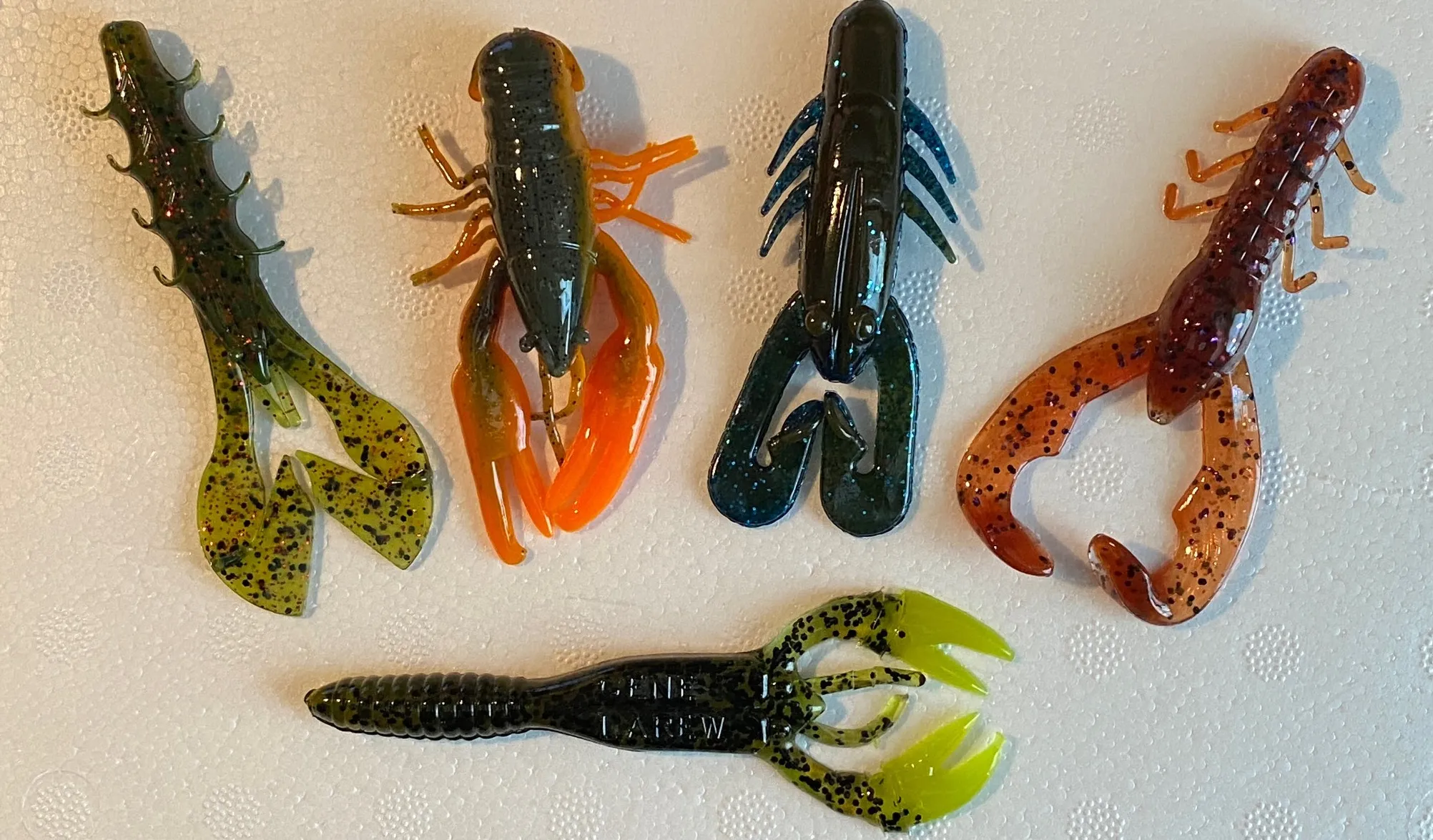
Creature baits are a diverse and highly effective category of soft plastics designed to imitate a wide range of natural prey, most notably crawfish (craws), lizards, and centipedes (or other multi-legged insects). Unlike simple worms or grubs, these baits feature complex shapes with multiple appendages—claws, legs, antennae—that create vibration, water displacement, and a lifelike profile. This makes them irresistible to predatory fish like bass, which commonly feed on these creatures.
Key Features & Types
- Crawfish (Craws): Designed to imitate a crawfish, a primary food source for many gamefish. They typically have a bulky body, claws, and a curved tail. When hopped along the bottom, they mimic a defensive or fleeing crawdad.
- Lizards: Feature a long body with four legs and a long, tapered tail. Their action is a combination of leg kicking and tail swimming, making them excellent for swimming through vegetation or hopping on top of it.
- Centipedes / Multi-Legged Baits: Imitate centipedes, millipedes, or other many-legged insects. Their numerous small legs create subtle vibrations and a unique profile as they fall or are dragged.
- Common Features:
- Appendages: Legs, claws, and tails that kick, flutter, and displace water, creating vibration and flash.
- Scent & Salt: Many are infused with salt or scent to make fish hold on longer.
- Buoyancy: Some are made with floating materials to help them stand up off the bottom, mimicking a defensive crawfish.
- Target Species: Primarily known for bass (largemouth and smallmouth), but also effective for pike, snakehead, walleye, and even large panfish.
How to Rig Creature Baits
Creature baits are incredibly versatile and can be rigged in several ways, depending on the cover and desired action.
- Jig Head (Lead Head): This is one of the most common and effective ways to fish a creature bait, especially craws. Simply thread the bait onto a jig head hook. The weight helps you cast, get to the bottom, and imparts action. Many creature baits are pre-rigged on a jig head, ready to fish. If not, you can easily add your own.
- Texas Rig (Weedless): For fishing in heavy cover like thick weeds, brush, or rocks, a Texas rig is ideal. Use a bullet weight and an offset worm hook. This makes the bait virtually weedless and allows it to slide through obstacles.
- Carolina Rig: For deep water or when you want the bait to float and move freely above the bottom, a Carolina rig is a great choice. The weight is above a swivel, and the bait is on a leader.
- Rubber Jig Trailer: Creature baits, especially craws, are excellent as trailers on a rubber jig (swim jig or football jig). The appendages add bulk and action to the jig, making it even more attractive.
Fishing Techniques: Imitating Prey
The key to success with creature baits is to make them act like the real thing. The techniques are similar to those used for other soft plastics but with an emphasis on bottom contact.
The "Hop and Drag" (Bottom Bouncing)
This is the most fundamental technique, especially for craws. Cast out, let the bait sink to the bottom. Then, use your rod tip to hop it up off the bottom, then let it fall back down on a semi-slack line. The claws and legs will kick and flutter during the fall. Then, drag it slowly along the bottom before the next hop. This mimics a crawfish or lizard moving along. This is a core bottom contact technique.
The "Swim and Pause"
This technique works well for lizards and some craws. Reel steadily at a slow to moderate pace to make the bait swim through the water column or just above the bottom. The appendages will kick and create vibration. Then, pause and let it sink. The sudden change in action often triggers strikes.
The "Dead Stick" (Slow Presentation)
For slow-moving predators like catfish or in cold water, a very slow presentation can be deadly. Cast out, let the bait sink to the bottom, and then simply let it sit for 10-20 seconds. Then, give it a very slight twitch or just drag it a few inches, then let it sit again. This imitates a creature that is unaware of danger. The original article notes this is effective for catfish.
Observe and Imitate
The best anglers are students of nature. If you can, take a moment to observe real crawfish, lizards, or insects. Notice how they move, how they react when startled, and how they fall. Then, try to mimic those movements with your rod. This is the essence of effective prey imitation.
When to Use Creature Baits
They are a go-to choice in many situations:
- Bottom Fishing: Any time you want to fish the bottom, especially around rocks, wood, or weed edges.
- Pre-Spawn and Spawn: Crawfish are a primary food source for bass preparing to spawn, making craw imitations particularly effective.
- Heavy Cover: Texas-rigged creature baits excel in thick vegetation and timber.
- Clear Water: Their lifelike profile and subtle action make them great for pressured fish in clear water.
Recognizing and Setting the Hook
When a fish bites a creature bait, you'll often feel a tick, a thump, or a heavy weight. As with worms, don't set the hook immediately on the first tap. Pause for a split second, reel down any slack, and then drive the hook home with a firm, sweeping hook set. This ensures the fish has fully taken the bait and you get a solid hook-up.
Pro Tip: When using a jig head or Texas rig, pay close attention to your line. Sometimes a fish will pick up the bait and swim towards you, creating slack. If you see your line go slack suddenly, reel down quickly and set the hook—it's often a fish!