The Minnow is one of the most common and versatile hard baits, designed to imitate small baitfish. This guide covers its design, types (Floating, Sinking, Suspending), and essential retrieval techniques to trigger strikes from predator fish.
What is a Minnow Lure?
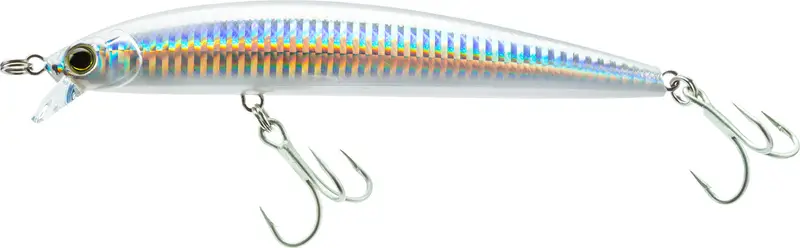
The Minnow is a classic hard bait designed to mimic the appearance and action of small baitfish, a primary food source for most predatory fish. Its design is inspired by the slender, stream-lined fish commonly known as minnows in many waters. The key to its action is the bib or lip (often called a diving bill or lip) located near the head. This lip, usually made of plastic or metal and set at an angle (typically 30-45 degrees), causes the lure to dive and wobble when retrieved, imitating a swimming or fleeing fish.
Key Features & Types
Beyond the basic slender, streamlined body, Minnows are categorized by their buoyancy:
- Floating Minnow (F): Floats at rest. When you retrieve, the lip makes it dive. Stop reeling, and it floats back up towards the surface. This is great for covering water and working around obstacles.
- Sinking Minnow (S): Sinks slowly when left alone. This allows you to fish at specific depths by counting it down before starting your retrieve. Effective for deeper water or when fish are holding low.
- Suspending Minnow (SP): A very popular type that neither floats nor sinks, but hovers at the depth you retrieve it to when you pause. This allows you to pause the lure right in front of a fish's face, often triggering a strike.
The lip itself varies in size, shape, and angle, which directly affects how deep the lure dives and how wide it wobbles. Larger lips generally make it dive deeper.
Fishing Techniques for Minnows
The Minnow is known for being relatively easy to use, but mastering its action can make you far more effective. The core idea is to use your rod and reel to make the lure imitate different baitfish behaviors.
Basic Retrieve: Steady Does It
This is the most fundamental and effective technique. After casting, lower your rod tip towards the water (pointing it at the lure). Begin reeling at a steady, consistent speed. The speed you choose will determine the dive depth and wobble. Start medium and adjust from there. The key is to keep the rod tip low to help the lure dive and maintain its action.
Advanced Techniques: Adding Action
Once you're comfortable with the steady retrieve, add variations to mimic different prey behaviors:
- The "Start and Stop": Reel steadily, then pause for a second or two. With a suspending minnow, it will hover enticingly. This pause is a classic strike trigger.
- The "Twitch": While reeling, give your rod tip a sharp, short twitch every few turns of the handle. This makes the lure dart forward suddenly, like a baitfish trying to escape.
- The "Wounded Zig-Zag": As you retrieve, gently twitch the rod tip to the left, then to the right. This makes the lure swim in a zig-zag "wounded" path, which can be irresistible to predators.
Finding the Right Speed
There's no single perfect retrieval speed. The best speed depends on the fish's mood and activity level. A simple rule: If they're not biting at a slow speed, speed up. If they're following but not striking at a fast speed, slow down. Experiment until you find what triggers a reaction.
Important Tip: Avoid "Torpedoing"
A common beginner mistake is reeling too fast, causing the Minnow to skim across the surface like a torpedo. This makes it look unnatural and very hard for a fish to catch. The lure should be swimming down in the water column, with a clear wobbling action, not just plowing along the top. Adjust your speed and rod tip angle to keep it swimming properly.
Note: The original article also mentions that some specialized lures are designed to mimic specific minnow behaviors, such as surfacing, bottom-grubbing, or dying, which are advanced variations on these core techniques.